Types of German Language Exams – A Complete Guide for Students in 2026
Published: 2026-02-25 06:54:32
If you're planning to study, work, or settle in Germany, proving your German language proficiency is not optional it's essential. Whether you're applying for a German university, a job visa, or permanent residency, clearing an officially recognized German language exam is often a mandatory requirement.
But here’s where most students get confused
There isn’t just one German exam.
There are multiple German proficiency tests accepted by universities, employers, and immigration authorities across Germany and Europe. Each exam serves a different purpose — from academic admissions to professional certification.
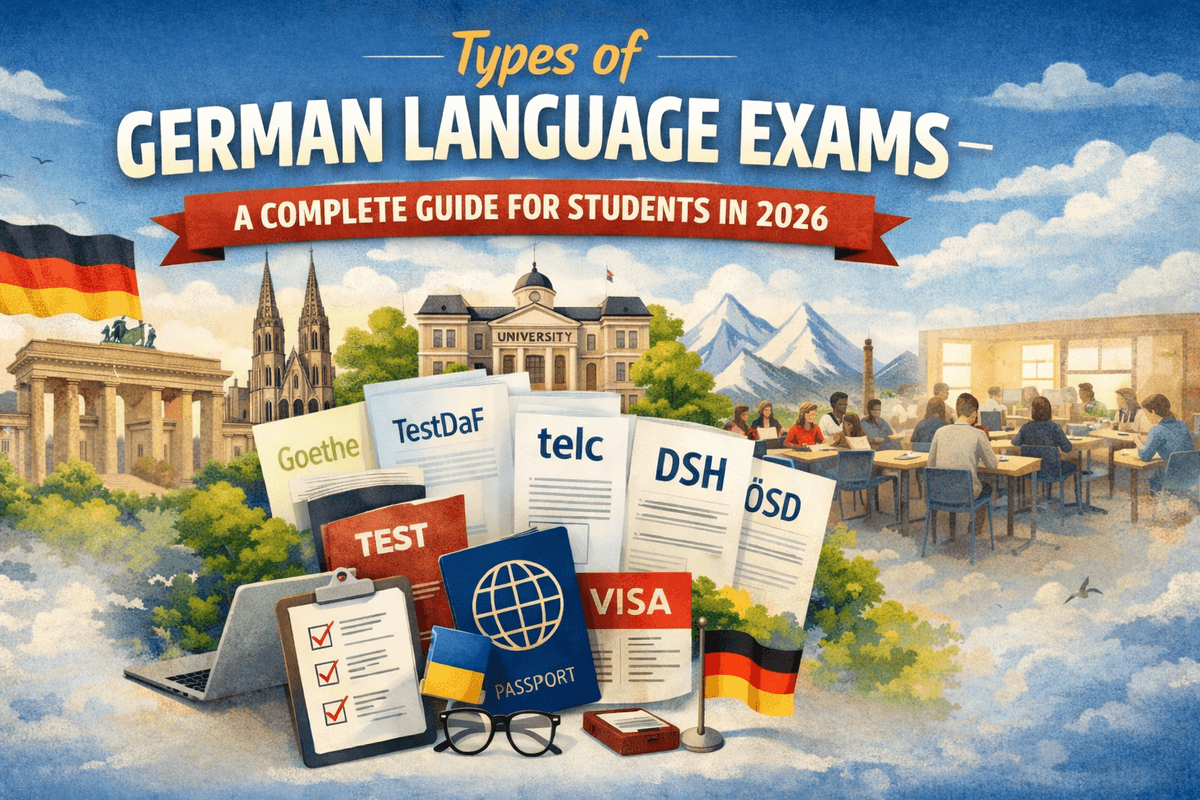
In this guide, we’ll break down the most popular types of German language exams, including:
- Goethe-Institut Exams (A1 to C2)
- TestDaF (Test Deutsch als Fremdsprache)
- DSH (German Language University Entrance Exam)
- telc German Language Exams
- ÖSD (Austrian German Language Diploma)
Let’s understand each one in detail so you can choose the right exam based on your goals.
Want to start learning German? Explore our complete German language course (A1–C2) here:
👉 https://www.teamforeignlanguages.com/courses/german
Ready to start your language journey? Visit Team Foreign Languages at
2/81-82, Ground Floor, Lalita Park, Laxmi Nagar, New Delhi – 110092 or call 91 9218071730 today!
Goethe-Institut Exams (A1 to C2)
The Goethe-Institut German language exams are one of the most trusted and internationally accepted certifications for proving your German proficiency. Designed according to the Common European Framework of Reference for Languages (CEFR), these exams evaluate your real-world ability to read, write, speak, and understand German across six progressive levels:
- A1 & A2 – Beginner Level
Ideal for basic communication and everyday conversations - B1 & B2 – Intermediate Level
Suitable for work opportunities, visa requirements, and academic preparation - C1 & C2 – Advanced Level
Required for university admissions and professional-level fluency
A Goethe certificate adds strong credibility to your academic or professional profile and is widely accepted by:
✔ German Universities for higher education
✔ Employers across Germany
✔ German Immigration Authorities
✔ German Embassies for visa processing
If you're planning to apply for a student visa to Germany, most universities expect applicants to present a B2 or C1 level Goethe certificate as proof of language proficiency.
Why Choose Goethe-Institut Exams?
- Lifetime Validity – No need for renewal once certified
- Globally Recognized – Accepted across Germany and other EU countries
- Academic & Immigration Approved – Suitable for study, work, and PR
- Accessible in India – Multiple authorized test centers available
For students aiming to build a future in Germany, the Goethe certification is often the first and most important step toward achieving that goal.
Wondering about the timeline to fluency? Read how long it takes to learn German here:
👉 https://www.teamforeignlanguages.com/blogs/how-long-does-it-take-to-learn-german
TestDaF (Test Deutsch als Fremdsprache)
TestDaF (Test Deutsch als Fremdsprache) is a specialized German language exam created for international students who are planning to study at universities in Germany. If your goal is academic admission, TestDaF is one of the most widely accepted and university-focused language certifications available.
Unlike Goethe exams that follow the A1–C2 CEFR levels, TestDaF uses its own scoring system known as TDN (TestDaF Level):
- TDN 3 – Basic academic understanding
- TDN 4 – University-eligible proficiency
- TDN 5 – Advanced academic fluency
To secure admission into most public universities in Germany, students are generally required to achieve TDN 4 in all four modules:
- Reading
- Writing
- Listening
- Speaking
This ensures that you can comfortably follow lectures, participate in discussions, and complete academic assignments in German.
Benefits of TestDaF:
- Accepted by All German Universities
- Designed for Academic Environments
- Recognized for Higher Education Admissions
- Digitally Conducted Worldwide
If you're aiming for a German-taught degree program, clearing TestDaF with the required score can significantly strengthen your university application and bring you one step closer to studying in Germany.
Want to know the complete German language course fees in Delhi (A1–C2)? Read here:
👉 https://www.teamforeignlanguages.com/blogs/german-language-course-fees
DSH (German Language University Entrance Exam)
DSH (Deutsche Sprachprüfung für den Hochschulzugang) is a university-level German language exam required for international students who want to pursue higher education in Germany. It is specifically designed to assess whether you have the academic language skills needed to study in a German-taught degree program.
Unlike other German proficiency tests, the DSH exam is conducted directly by German universities—usually after you receive a conditional admission letter. This means you can take the test on campus before officially starting your course.
The DSH exam is divided into three proficiency levels:
- DSH-1 – Basic academic proficiency
- DSH-2 – Suitable for most university programs
- DSH-3 – Advanced academic proficiency
To gain full admission into a German university, most institutions require candidates to clear DSH-2 or DSH-3.
Key Highlights of the DSH Exam:
- Conducted exclusively in Germany
- Organized by individual universities
- Focuses on academic German language usage
- Includes both written and oral examinations
Clearing the DSH exam demonstrates that you're fully prepared to understand lectures, write assignments, and actively participate in academic discussions in German making it a crucial step for university-bound students.
If you’re planning your career after school, explore the German language course after 12th here:
👉 https://www.teamforeignlanguages.com/blogs/german-language-course-after-12
telc German Language Exams
The telc (The European Language Certificates) exams are internationally recognized German proficiency tests that follow the CEFR framework (A1 to C2 levels). These exams are designed to evaluate your practical communication skills and are accepted for both academic and professional purposes across Germany and Europe.
Some of the most popular telc German exams include:
- telc A1 – Basic communication skills
- telc B1 – Required for PR and work visas
- telc B2 – Suitable for jobs and academic preparation
- telc C1 Hochschule – Accepted by German universities for higher education
The telc C1 Hochschule certificate is especially valuable for students applying to German-taught degree programs, as it confirms your readiness to understand lectures, participate in seminars, and complete academic coursework in German.
Why Choose telc Exams?
- Recognized by German Universities
- Suitable for Immigration and Work Visa Applications
- Faster Result Processing
- More Affordable Compared to Other Certifications
For students looking for a cost-effective and university-approved German language certification, telc is a strong alternative to traditional exam options.
Want to improve your fluency faster? Discover the best ways to learn German language fast here:
👉 https://www.teamforeignlanguages.com/blogs/best-ways-to-learn-german-language-fast
Book your free counseling session today!
Visit us in Laxmi Nagar, New Delhi or contact 91 9218071730 to get started.
ÖSD (Austrian German Language Diploma)
The ÖSD (Österreichisches Sprachdiplom Deutsch) is an Austrian government-approved German language certification that is widely recognized across major German-speaking countries, including:
✔ Germany
✔ Austria
✔ Switzerland
ÖSD exams are aligned with the CEFR framework and are available across all proficiency levels from A1 (Beginner) to C2 (Advanced).
For students planning to pursue higher education in Germany, the ÖSD C1 certificate is commonly accepted by universities as valid proof of academic-level German proficiency. It demonstrates your ability to understand complex academic content, communicate effectively, and manage university-level coursework in German.
Advantages of the ÖSD Exam:
- Government-Recognized Certification
- Accepted for Both Work and Study Purposes
- Valid Across Europe
- Focus on Real-Life Communication Skills
If you're looking for a practical, globally accepted German language qualification that supports both academic and career goals, ÖSD is a reliable option to consider.
Which German Exam Should You Choose?
Choosing the right German language exam depends entirely on your end goal whether it's studying in Germany, applying for a job, or settling there permanently. Each exam is designed for a specific pathway, so selecting the correct one can make your visa or admission process much smoother.
If you want to understand German course levels from A1 to C2 in Delhi, read this complete guide:
👉 https://www.teamforeignlanguages.com/blogs/german-courses-in-new-delhi-a1-to-c2
Here’s a quick guide to help you decide:
| Purpose | Recommended Exam |
| Study in Germany | TestDaF / telc C1 Hochschule / Goethe C1 |
| Work Visa | Goethe B1 / telc B1 |
| PR in Germany | Goethe B1 |
| Student Visa | Goethe B2 / C1 |
| University Admission | DSH-2 / TestDaF 4 |
If your aim is to enroll in a German-taught university program, exams like TestDaF, DSH-2, or telc C1 Hochschule are typically preferred by academic institutions. On the other hand, if you're planning to move to Germany for employment or apply for Permanent Residency (PR), a B1 level certification such as Goethe or telc is usually required.
Understanding which exam aligns with your career or study plans can save you both time and effort and bring you one step closer to achieving your dream of living or studying in Germany.
Want to explore job options after learning German? Read about the career opportunities after learning German in India here:
👉 https://www.teamforeignlanguages.com/blogs/career-opportunities-after-learning-german-in-india
Prepare with TILS – School of Foreign Languages
Planning to appear for a German language proficiency exam? The right guidance can make a huge difference in how confidently you perform on test day.
At TILS – School of Foreign Languages, students receive structured, exam-focused training that’s designed to match international standards and real exam formats.
Here’s what you get:
✔ German Language Courses from Beginner (A1) to Advanced (C1)
✔ Targeted Preparation for Goethe, TestDaF, telc & ÖSD Exams
✔ Certified & Experienced Trainers
✔ Regular Mock Tests Based on Actual Exam Patterns
✔ Speaking Practice & Interview Preparation
✔ Flexible Batch Timings for Students & Working Professionals
Whether you're aiming for B1 certification for PR in Germany or C1 level for university admission, TILS helps you build the language skills and exam strategies needed to achieve your goals with confidence.
Contact Details
Visit Us
2/81-82, Ground Floor, Lalita Park,
Laxmi Nagar, New Delhi - 110092
Call Us
91 9218071730
Email Us
info@teamforeignlanguages.com
FAQs – German Language Exams
Q1. Which German language exam is best for studying in Germany?
For academic admissions, TestDaF and telc C1 Hochschule are among the most widely accepted certifications by German universities. Some institutions also accept Goethe C1 and ÖSD C1 as proof of language proficiency.
Q2. Is the Goethe certificate valid for a lifetime?
Yes, Goethe-Institut certificates do not have an official expiry date and are valid for a lifetime. However, some universities may prefer a recently obtained certificate (within the last 2–3 years).
Q3. What level of German is required for PR in Germany?
To apply for Permanent Residency (PR) in Germany, you are typically required to have a B1 level German language certificate from a recognized exam body such as Goethe or telc.
Q4. Can I study in Germany with a B2 level in German?
Some universities may accept a B2 level certificate for certain programs, but most public universities require C1 level proficiency for German-taught courses.
Q5. Which exam is easier: Goethe or TestDaF?
Goethe exams are considered more flexible and suitable for general language learners, while TestDaF is academically focused and designed specifically for students planning to pursue higher education in Germany.
Q6. Is TestDaF accepted by all German universities?
Yes, TestDaF is accepted by all public universities in Germany, provided you meet the minimum required score (usually TDN 4 in all four sections).
Q7. Can I take the DSH exam in India?
No, the DSH exam is conducted only in Germany by universities, usually after you receive a conditional admission letter.
Q8. What is telc C1 Hochschule?
telc C1 Hochschule is an advanced-level German language exam specifically designed for students who want to study at German universities. It is accepted for academic admissions across many institutions.
Q9. How long does it take to prepare for B1 or C1 level German exams?
Preparation time varies depending on your current proficiency. On average, it takes 4–6 months to reach B1 level and 8–12 months to achieve C1 level with proper training.
Q10. Are German language exams mandatory for student visas?
Yes, if your course is taught in German, you must provide proof of language proficiency through exams like Goethe, TestDaF, telc, or ÖSD during the student visa application process.
Q11. Which German exam is best for work opportunities in Germany?
For employment and job visa purposes, a B1 or B2 level certificate from Goethe or telc is generally sufficient, depending on the job requirements.
Q12. How can I prepare for German language exams in Delhi?
You can join a structured training program at TILS – School of Foreign Languages, where you get exam-oriented coaching, mock tests, and speaking practice to help you succeed in exams like Goethe, TestDaF, telc, and ÖSD.
Ready to start your German language journey?
Join TILS – School of Foreign Languages today and prepare for globally recognized German exams with expert guidance. 🇩🇪