German Language Levels from A1 to C2 Explained (2026)
Published: 2026-01-22 08:46:30
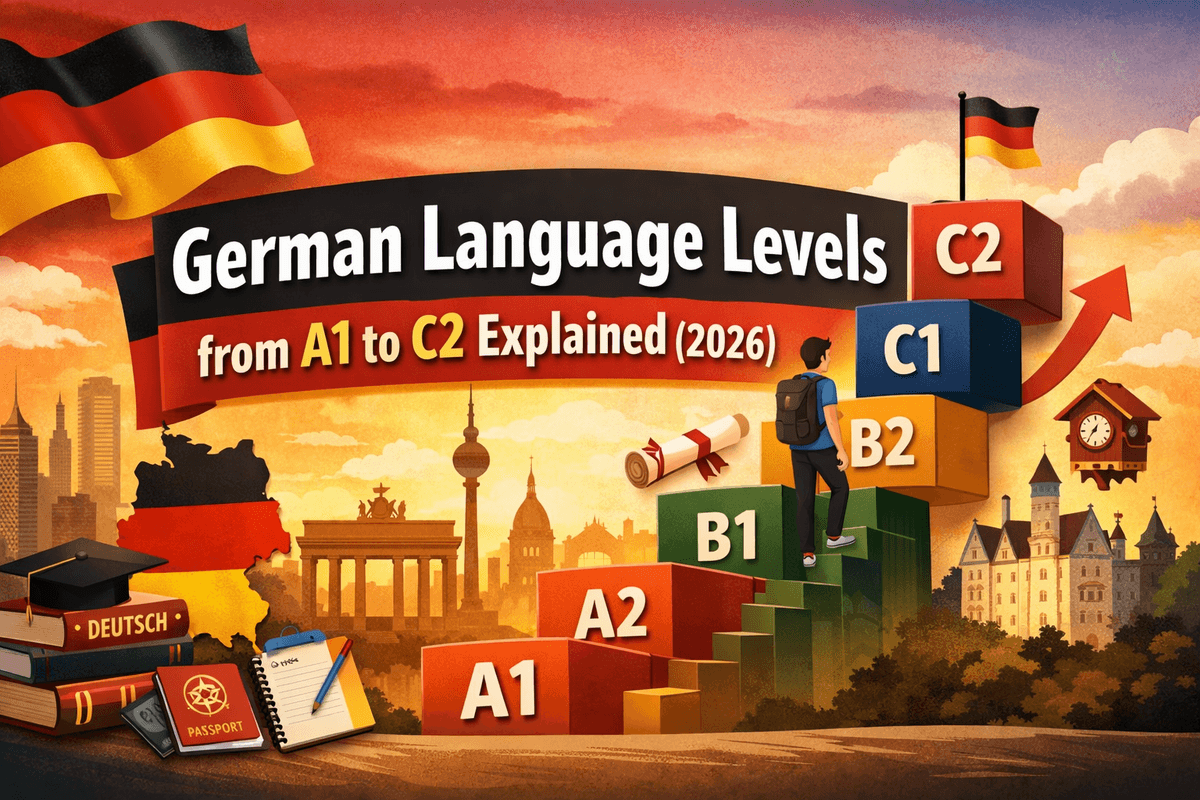
When learning the German language, your proficiency is measured using the Common European Framework of Reference for Languages (CEFR). This framework is the international standard for assessing language skills and divides learners into six levels: A1, A2, B1, B2, C1, and C2. At TILS – School of Foreign Languages, we use these levels to help learners understand their current skills and provide a clear roadmap for improvement.
In this article, we’ll explain the different German language levels, what they mean, how long it takes to achieve them, and why understanding your level is crucial for success. Whether you want to learn German online, attend German language classes near you, or enroll in a German language course in Delhi, this guide will help you get started.
To choose the right certification, read our complete German Language Exams 2026 guide.
If you’re looking for quality training, check out our German Language Classes in Delhi for tips on choosing the right program.
https://www.teamforeignlanguages.com/blogs/german-language-classes-in-delhi
What Are German Language Levels?
The CEFR (Common European Framework of Reference for Languages) organizes German learners into three main divisions, making it easier to assess skills and track progress:
- A Levels (A1 & A2) – Basic Users: Ideal for beginners who can understand and use simple phrases for everyday situations.
- B Levels (B1 & B2) – Independent Users: For learners who can communicate confidently in work, school, or travel scenarios.
- C Levels (C1 & C2) – Proficient Users: For advanced learners who can express themselves fluently, understand complex texts, and interact like a native speaker.
These levels provide a clear roadmap for learning, helping educators, students, and employers understand language proficiency at a glance. Established by the Council of Europe, the CEFR has become the global standard for measuring progress in not just German, but all European languages.
For practical study tips, check out our How to Learn German Language guide.
What Level of German Is Considered Fluent?
In general, achieving B2 level in German is considered fluent. At this stage, you can:
- Communicate comfortably with native speakers without frequent misunderstandings
- Read and understand complex texts, including articles, reports, and essays
- Write clearly and coherently on a variety of topics
- Participate in university courses or professional training that require German proficiency
For professional or business contexts, such as working in a German office or collaborating internationally, C1 is recommended. At C2, you reach mastery, enabling you to navigate complex academic discussions, technical topics, and nuanced social interactions with ease, essentially operating like a near-native speaker.
To understand how long each level takes, see our German Language Course Duration guide.
If you’re looking for the best local options to learn German, check out Top German Language Course Near Me for guidance and tips.
https://www.teamforeignlanguages.com/blogs/top-german-language-course-near-me
Beginner: CEFR German Language Level A1
A1 is the absolute beginner level. By this stage, you can:
- Understand basic German words and phrases
- Introduce yourself and ask simple questions
- Follow slow and clear spoken German
Typically, reaching A1 requires 60–150 hours of study with guidance from a professional teacher. This level is your first milestone on the journey to fluency.
Pre-Intermediate: CEFR German Language Level A2
At A2, you can understand frequently used expressions and communicate in familiar situations:
- Describe your background, family, and surroundings
- Order food in restaurants
- Talk about everyday topics in simple German
It usually takes 150–250 hours of study to reach this stage. Many German language courses in Delhi, Pune, or Chennai cover this level effectively.
Prefer flexibility? Check out our German Language Course Online guide.
Intermediate: CEFR German Language Level B1
B1 marks the intermediate stage and the first level of independent use:
- Discuss travel, work, school, hobbies, and leisure activities
- Write short texts on familiar topics
- Participate in conversations without constant help
This level typically requires 250–500 hours of study. Achieving B1 prepares you for more advanced learning and sets the foundation for B2 fluency.
Upper-Intermediate: CEFR German Language Level B2
At B2, you are considered fluent and competent:
- Communicate confidently with native speakers
- Understand abstract or technical texts
- Discuss complex topics and write clearly
Reaching B2 usually requires 450–600 hours of study. This is the level needed for jobs, university admissions, or professional interactions in Germany.
Explore flexible options with our Online German Language Course guide.
If you’re searching for top language training, check out the Best German Language Institute in Laxmi Nagar for course guidance and institute tips.
https://www.teamforeignlanguages.com/blogs/best-german-language-institute-in-laxmi-nagar
Advanced: CEFR German Language Level C1
C1 is the advanced stage of learning:
- Speak fluently and spontaneously in professional and social settings
- Write complex texts with proper structure and style
- Understand implicit meanings in conversations and texts
Typically, 600–750 hours of study are needed to reach C1. This level is ideal for business German, academic purposes, and official certifications.
Mastery: CEFR German Language Level C2
C2 represents mastery:
- Understand almost everything read or heard in German
- Express ideas clearly and precisely, even on complex topics
- Participate in nuanced discussions and debates
Reaching C2 can take 750–1,000 hours of study. Mastery enables you to teach German, work in advanced professional settings, and interact like a near-native speaker.
Learn more about options and levels in our German Language Course guide.
Before you enroll, check the German Language Course Fees article to understand the pricing structure and options available.
https://www.teamforeignlanguages.com/blogs/german-language-course-fees
How to Learn German Language Effectively
Learning German efficiently requires a structured approach, consistent practice, and the right resources. Here’s how you can accelerate your progress:
- Enroll in a Structured Course: Join a German language course online or attend classes at a reputed institute like TILS – School of Foreign Languages. A guided curriculum ensures you cover all levels from A1 to C2 systematically.
- Practice Regularly: Consistency is key. Practice speaking, listening, reading, and writing every day to reinforce your skills and improve retention. Even 20–30 minutes daily makes a significant difference over time.
- Leverage Online Tools: Use apps, online courses, and interactive resources to supplement classroom learning. Platforms like Lingoda or Duolingo can provide additional practice anytime, anywhere.
- Set Clear Goals: Decide whether your target is B2 fluency for everyday communication or C2 mastery for academic and professional excellence. Knowing your goal helps structure study hours and track progress effectively.
To understand the basics, check our German Language article.
If you’re planning your next steps after school, read the German Language Course After 12 guide for options and benefits.
https://www.teamforeignlanguages.com/blogs/german-language-course-after-12
FAQs About German Language Levels
Q1. What are the German language levels?
A: German levels follow the CEFR: A1, A2, B1, B2, C1, and C2, ranging from beginner to mastery.
Q2. How many hours to reach B2 in German?
A: Around 450–600 hours of study, depending on learning methods and practice.
Q3. Which German level is fluent?
A: B2 is generally considered fluent. C1 and C2 indicate advanced and mastery levels.
Q4. Can I learn German online?
A: Yes, you can join German language courses online or use apps for guided learning.
Q5. How to get certified in German?
A: Take exams like Goethe-Zertifikat or courses from certified institutes such as TILS – School of Foreign Languages.
Q6. Which Indian languages are related to German?
A: German is a Germanic language, related linguistically to English, Dutch, and some Scandinavian languages.
Q7. Where can I find the best German language institute in India?
A: TILS offers courses in Delhi, Chennai, Hyderabad, Pune, and Bangalore, with native-level teachers.
Start Learning German with TILS – School of Foreign Languages
Whether you want to start from A1 or reach C2 mastery, TILS – School of Foreign Languages provides high-quality, structured courses for all levels. Learn German online or attend classroom sessions in your city.
Visit Us:
2/81-82, Ground Floor, Lalita Park, Laxmi Nagar, New Delhi – 110092
Call Us: 91 9218071730
Email: info@teamforeignlanguages.com