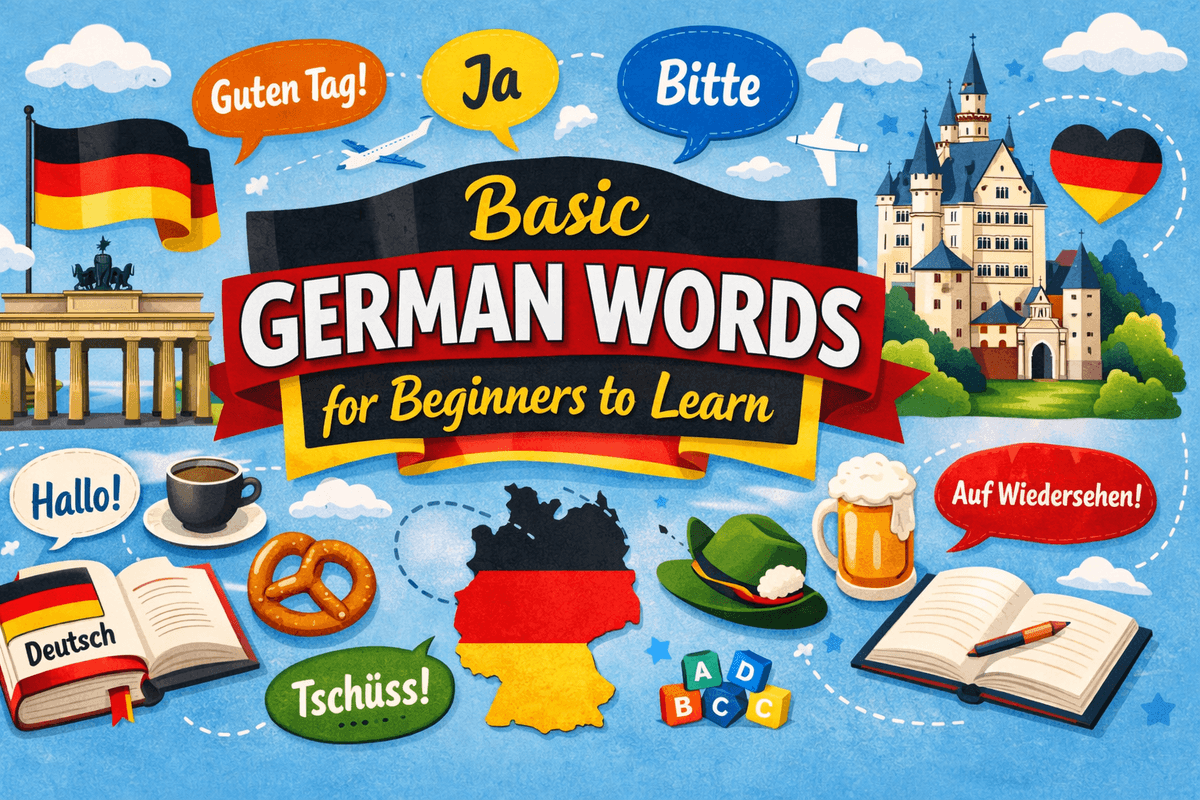
Basic German Words for Beginners to Learn
Published: 2026-02-07 07:47:10
Learning German can feel exciting and a little intimidating at the same time but don’t worry. Every fluent German speaker started exactly where you are now: with basic German words for beginners. Building a strong vocabulary foundation is the fastest way to start understanding, speaking, and enjoying the German language.
In this complete beginner-friendly guide, you’ll learn essential German language words with meaning, common phrases, verbs, numbers, and everyday expressions used in real-life conversations. Whether your goal is higher studies, career growth, travel, or exams like A1/A2 German, mastering these basics will give you confidence from day one.
Want to learn German step by step? Explore the German language course at TILS – School of Foreign Languages here:
https://www.teamforeignlanguages.com/courses/german
Why Learn Basic German Words First?
Before jumping into grammar rules, it’s important to understand why vocabulary matters so much:
- Helps you understand spoken German faster
- Makes basic conversations possible from day one
- Builds confidence and motivation
- Forms the base for advanced grammar and sentence structure
- Essential for kids and adult beginners alike
In fact, language experts agree that knowing even 1,000–2,000 common German words allows you to understand a large portion of everyday conversations. That’s why learners often search for resources like German language words list, German language words in English, and even the 10,000 most common German words PDF.
Essential German for Beginners
Let’s begin with the most important everyday German words and phrases that every beginner should learn first. These expressions form the backbone of daily communication in German-speaking countries and are used from the moment you say hello to the time you say goodbye.
For a deeper look at choosing the best German language course, check out: https://www.teamforeignlanguages.com/blogs/best-german-language-course
Visit Us
2/81-82, Ground Floor, Lalita Park, Laxmi Nagar, New Delhi - 110092
Call Us
Email Us:
info@teamforeignlanguages.com
Common Greetings & Essentials
Greetings are usually the first German language words beginners learn, and for good reason—they are used everywhere: at work, in schools, shops, public places, and social gatherings. Mastering these basics will help you sound polite, confident, and approachable from day one.
- Hallo – Hello (the most common and versatile greeting)
- Guten Tag – Good day (formal and widely used)
- Guten Morgen – Good morning
- Guten Abend – Good evening
- Tschüss – Bye (informal and friendly)
- Auf Wiedersehen – Goodbye (formal)
- Ja / Nein – Yes / No
- Bitte – Please / You’re welcome (a very important polite word)
- Danke – Thank you
- Entschuldigung – Excuse me / Sorry (used to get attention or apologize)
- Es tut mir leid – I am sorry (used for sincere apologies)
- Prost! – Cheers! (commonly said while drinking together)
These essential German words are used daily in conversations across Germany, whether you’re meeting someone for the first time, ordering food, attending classes, or interacting in professional environments. Learning and practicing them regularly will instantly boost your confidence and help you feel more comfortable speaking German in real-life situations.
Discover where to learn the German language in Delhi:
https://www.teamforeignlanguages.com/blogs/where-to-learn-german-language-in-delhi
Key Conversational German Phrases
Once you’re comfortable with basic greetings, the next step is learning simple conversational German phrases that help you interact confidently with people. These expressions are incredibly practical and are used in everyday situations such as introductions, travel, classrooms, shops, and casual conversations.
Mastering these phrases will allow you to ask questions, introduce yourself, and seek help—even with a limited vocabulary.
- Wie geht’s? – How are you?
(A friendly way to start conversations) - Ich heiße… / Mein Name ist… – My name is…
(Used when introducing yourself) - Freut mich – Nice to meet you
(Polite and commonly used after introductions) - Ich verstehe nicht – I don’t understand
(Very helpful for beginners while learning) - Sprechen Sie Englisch? – Do you speak English?
(Useful when you’re unsure of your German skills) - Was ist das? – What is that?
(Perfect for learning new German words) - Können Sie mir helfen? – Can you help me?
(Essential in public places and daily situations)
These conversational German phrases are especially useful for travelers, students, and beginners enrolled in a German language course. Practicing them regularly will help you communicate naturally, build confidence, and take your first real steps toward speaking fluent German.
Learn more about choosing the right German language school here:
https://www.teamforeignlanguages.com/blogs/german-language-school
German Language Words with Meaning (Essential Vocabulary)
Building a strong foundation in German starts with learning essential vocabulary especially pronouns and common nouns. These words appear in almost every sentence, making them some of the most frequently used German language words in daily communication.
Personal Pronouns in German
Personal pronouns are among the first and most important German words beginners should learn. They help you talk about yourself, ask questions, and form simple sentences.
- Ich – I
- Du – You (informal, used with friends and family)
- Er – He
- Sie – She / You (formal, used politely or professionally)
- Es – It
- Wir – We
- Ihr – You all (plural, informal)
Once you’re comfortable with these pronouns, you’ll find it much easier to create basic German sentences.
Visit Us
2/81-82, Ground Floor, Lalita Park, Laxmi Nagar, New Delhi - 110092
Call Us
Email Us:
info@teamforeignlanguages.com
Common German Nouns for Daily Use
Nouns are the names of people, places, and things we use every day. Learning these basic German nouns with meaning helps beginners understand conversations and express simple ideas.
- Das Haus – The house
- Das Auto – The car
- Das Wasser – The water
- Die Arbeit – The work / job
- Der Freund – The friend (male)
- Die Freundin – The friend (female)
- Das Essen – The food
- Die Schule – The school
- Der Lehrer / Die Lehrerin – Teacher (male/female)
These commonly used nouns form an essential German language words list that is perfect for beginners, students, and even kids learning German. Practicing them daily will help you recognize words faster, improve comprehension, and speak more naturally.
Find out how to learn German language courses in Delhi:
https://www.teamforeignlanguages.com/blogs/learn-german-language-course-in-delhi
Key German Verbs (Infinitive Form)
Verbs are the heart of any language, and German is no exception. They describe actions, states, and abilities—and without them, forming sentences is impossible. These are some of the most commonly used German verbs that beginners encounter in everyday conversations.
Learning these verbs in their infinitive form gives you a solid base for speaking, listening, and later understanding grammar and sentence structure.
- Sein – To be (one of the most important German verbs)
- Haben – To have
- Machen – To do / make
- Gehen – To go
- Kommen – To come
- Können – Can / to be able to
- Sprechen – To speak
- Lernen – To learn
- Arbeiten – To work
- Essen – To eat
These essential verbs appear repeatedly in daily conversations, classrooms, offices, and travel situations. If your long-term goal is to master the 10,000 most common German words, these verbs are absolutely non-negotiable and should be practiced regularly.
Check the latest ECL exam dates here:
https://www.teamforeignlanguages.com/blogs/ecl-exam-dates
German Numbers (0–10)
Numbers play a crucial role in shopping, traveling, telling time, and everyday communication. Learning German numbers from 0 to 10 is the first step toward counting confidently and understanding prices, dates, and basic information.
- Null – 0
- Eins – 1
- Zwei – 2
- Drei – 3
- Vier – 4
- Fünf – 5
- Sechs – 6
- Sieben – 7
- Acht – 8
- Neun – 9
- Zehn – 10
Once you master these numbers, counting in German becomes much easier, and progressing to higher numbers feels natural. With regular practice, you’ll quickly gain confidence using numbers in real-life German conversations.
German Language Words and Phrases for Daily Use
To sound more natural in German, it’s important to go beyond greetings and learn everyday German words and phrases that native speakers use all the time. These expressions are perfect for daily situations such as eating out, shopping, casual conversations, and social interactions.
Using these phrases regularly will help you blend into real-life conversations and speak German with greater ease and confidence.
- Guten Appetit! – Enjoy your meal
(Commonly said before eating, at home or in restaurants) - Wie viel kostet das? – How much does this cost?
(Essential for shopping and traveling) - Ich mag das – I like this
(A simple way to express preferences) - Ich brauche Hilfe – I need help
(Very useful in unfamiliar situations) - Bis bald – See you soon
(Friendly and informal goodbye) - Keine Ahnung – No idea
(Frequently used in casual conversations)
These commonly used German phrases help beginners sound more fluent, natural, and confident. Practicing them in everyday situations whether in class, while traveling, or at home will make your German feel more authentic and conversational.
Learn about German language levels here:
https://www.teamforeignlanguages.com/blogs/german-language-levels
Visit Us
2/81-82, Ground Floor, Lalita Park, Laxmi Nagar, New Delhi - 110092
Call Us
Email Us:
info@teamforeignlanguages.com
German Language Words for Kids
Children learn languages faster and more naturally when they start with simple, familiar words. Introducing German through everyday objects, animals, and people makes learning fun and stress-free for kids.
Here are some easy and commonly used German words for kids that are perfect for beginners:
- Mama / Papa – Mom / Dad
- Buch – Book
- Ball – Ball
- Katze – Cat
- Hund – Dog
- Apfel – Apple
- Schule – School
These words are easy to pronounce, easy to remember, and closely connected to a child’s daily life. Starting early with basic German vocabulary for kids helps children develop better pronunciation, listening skills, and confidence.
With regular practice through songs, stories, games, and conversations, children can begin to understand and speak German naturally and effortlessly laying a strong foundation for future fluency.
Get the latest German language exams 2026 updates here:
https://www.teamforeignlanguages.com/blogs/german-language-exams-2026
Tips to Learn German Words Faster
Learning German vocabulary doesn’t have to be difficult or overwhelming. With the right strategies and consistent practice, you can remember words faster and start using them confidently in real-life situations.
Here are some effective tips to learn German words quickly:
- Practice speaking daily – Even 10 minutes a day can make a big difference. Saying words out loud improves pronunciation and memory.
- Use flashcards or vocabulary apps – These tools help you revise words regularly and make learning interactive.
- Watch German videos with subtitles – Movies, YouTube videos, and short clips help you hear how words are used naturally.
- Revise commonly used words repeatedly – Repetition is key. Focus on everyday German words you’ll use most often.
- Enroll in a professional German language course – Expert guidance ensures correct pronunciation, structured learning, and faster progress.
Consistent exposure to the language through listening, speaking, reading, and practice is the real secret to mastering German. Small daily efforts lead to big results over time.
Learn how to learn the German language effectively here:
https://www.teamforeignlanguages.com/blogs/how-to-learn-german-language
Visit Us
2/81-82, Ground Floor, Lalita Park, Laxmi Nagar, New Delhi - 110092
Call Us
Email Us:
info@teamforeignlanguages.com
Why Choose TILS – School of Foreign Languages?
If you’re truly serious about learning German and achieving real fluency, TILS – School of Foreign Languages is the right place to start. TILS offers expert-led German language courses designed for beginners, kids, students, and working professionals—making learning effective, structured, and enjoyable.
What Makes TILS Special?
TILS stands out because of its learner-focused approach and commitment to quality education:
- Certified and experienced German trainers who simplify complex concepts
- Beginner-friendly teaching methods that build confidence from day one
- Balanced focus on speaking, listening, reading, and writing skills
- Online and classroom learning options to suit your schedule
- Affordable fees with flexible batch timings for students and professionals
Whether you’re starting with basic German words or aiming for advanced fluency, TILS provides step-by-step guidance, personalized support, and a practical learning environment.
With the right training, consistent practice, and expert mentorship, TILS helps you turn German learning goals into real-life communication skills every step of the way.
Discover the German language course duration here:
https://www.teamforeignlanguages.com/blogs/german-language-course-duration
FAQs – Basic German Words for Beginners
Q1. How many German words should a beginner learn first?
A beginner should aim to learn 500–1,000 common German words initially. This vocabulary range is enough to understand everyday conversations, form simple sentences, and manage basic situations like shopping, travel, and introductions.
Q2. Are German words difficult to learn for beginners?
Not at all. German is a logical and structured language, which actually makes it easier to learn than many people expect. Once you understand basic pronunciation and word patterns, learning German words becomes much more manageable.
Q3. Can I learn German words without studying grammar first?
Yes, you can start by learning vocabulary first. However, to form correct and meaningful sentences, basic grammar is important. The best approach is to learn common German words alongside simple grammar rules.
Q4. How long does it take to learn basic German words?
With consistent practice, most beginners can learn basic German vocabulary within 2–3 months. Daily practice, listening exercises, and guided learning can significantly speed up the process.
Q5. Are German words similar to English words?
Yes, many German words are similar to English because both languages share Germanic roots. For example, Haus (house), Wasser (water), and Name (name). This similarity makes learning German easier for English speakers.
Q6. What is the best way to memorize German vocabulary?
The most effective methods include daily revision, flashcards, speaking practice, listening to German audio, and using words in sentences. Joining a professional German language course also helps reinforce learning.
Q7. Is German useful for careers and higher studies?
Absolutely. German is highly valuable for jobs, higher education, engineering, IT, healthcare, research, and international business, especially in Germany, Austria, and Switzerland.
Q8. Can kids learn German words easily?
Yes. Kids learn German very quickly when introduced through simple words, stories, songs, and activities. Early exposure helps with better pronunciation and natural fluency.
Q9. Should I learn the 10,000 most common German words?
You don’t need all 10,000 words at once. Start with the most common German words and gradually expand your vocabulary as your level improves. Learning in stages is more effective.
Q10. Where can I learn German professionally in Delhi?
You can enroll at TILS – School of Foreign Languages, located in Laxmi Nagar, New Delhi, which offers structured German courses for beginners, kids, students, and working professionals with expert trainers.
Start Your German Learning Journey Today!
Learning German begins with mastering the basics and you’ve already taken the first step. With the right guidance, practice, and environment, fluency is achievable.
Visit Us
TILS – School of Foreign Languages
2/81-82, Ground Floor, Lalita Park, Laxmi Nagar, New Delhi – 110092
Call Us: 919218071730
Email Us: info@teamforeignlanguages.com
Enroll today and turn basic German words into confident conversations!