
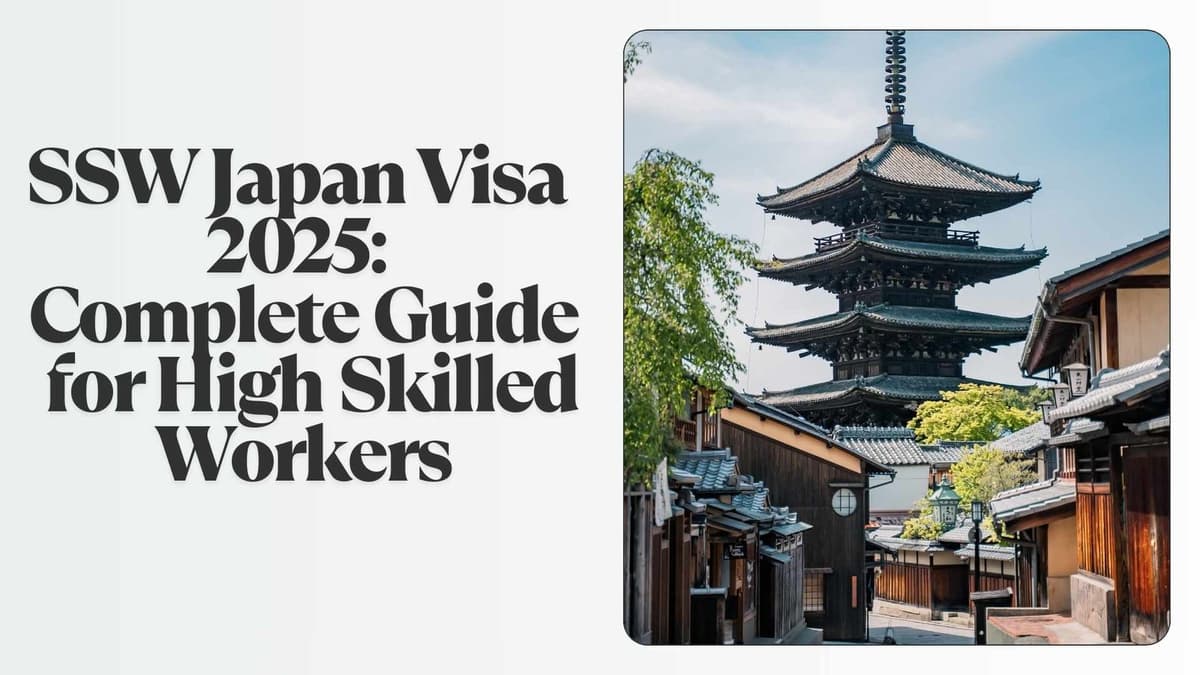
SSW Japan Visa 2026: Complete Guide for High Skilled Workers
Published: 2025-10-03 06:50:02
Japan continues to face deep labor shortages across essential industries, and in 2026 the Specified Skilled Worker (SSW) pathway remains one of the most practical, fastest routes for foreign professionals to work legally in Japan. If you’re aiming for a stable, skill-based career in Japan, the SSW program is designed exactly for you.
This guide explains SSW visa types, eligibility, sectors, exams, fees, and the full application process updated for 2026 so you can prepare with clarity and confidence.
SSW Visa age limit and salary in Japan for Indian workers
What Is the Specified Skilled Worker (SSW) Visa?
The Specified Skilled Worker (SSW) visa is Japan’s modern, skill-based work pathway created to welcome foreign professionals into industries facing serious labor shortages. Unlike older trainee-style programs, SSW is a formal employment visa that guarantees fair wages, legal worker protections, and clear rules for residence and renewal.
Designed for people with practical skills and basic Japanese ability, SSW connects qualified candidates directly with real jobs across priority sectors from caregiving and construction to food service, manufacturing, and newly added logistics fields.
In 2026, the SSW program plays a central role in Japan’s workforce strategy, expanding into more industries and opening doors for thousands of skilled workers who want stable employment, international exposure, and the opportunity to build a long-term career in Japan.
Check eligibility details in this SSW Japan Visa guide.
Key Updates for 2026 You Must Know
2026 is a landmark year for SSW applicants as Japan scales the program to tackle urgent workforce gaps across the country.
- Expanded to 19 industries: New priority fields logistics warehouses, linen supply, and resource recycling—are being formally integrated from fiscal 2026, creating fresh job openings beyond the traditional sectors.
- Bigger intake goals: Japan aims to welcome around 820,000 SSW workers over the next five years, signaling strong demand and faster hiring across industries.
- Proposed fee revisions: Immigration costs are expected to rise significantly. Applications for status change or extension may jump from ¥6,000 to ¥30,000–¥40,000, while permanent residence fees could exceed ¥100,000.
Together, these changes make 2026 a strategic window to apply early before higher fees take effect and competition increases.
Two Types of SSW Visas
Japan’s SSW pathway is divided into two levels, designed to match your skill growth and long-term plans in the country.
SSW (i) – Entry-Level Skilled Workers
This is the starting point for most applicants who have practical knowledge or hands-on experience in one of the approved sectors.
- Valid stay up to 5 years
- Family sponsorship is not permitted
- Requires passing a Japanese language test and a sector skill exam
- Ideal for candidates beginning their professional journey in Japan
SSW (i) gives you legal work status, fair pay, and valuable on-ground experience in Japanese industries.
Explore our Learn German Language Course in Delhi for beginners and advanced learners.
SSW (ii) – Advanced Skilled Workers
This level is for workers who have developed higher expertise and proven performance in their field.
- No limit on visa renewals
- Family members can live with you in Japan
- A strong step toward long-term residence and stability
Most candidates enter through SSW (i), gain experience, and then upgrade to SSW (ii) turning a short-term opportunity into a long-term international career.
Basic Eligibility Criteria
Before you apply for the SSW visa, make sure you meet these essential requirements. These criteria ensure you’re ready to work, communicate, and perform confidently in a Japanese workplace.
| Requirement | What It Means for You |
| Age | You must be 18 years or older at the time of application. |
| Language Ability | Clear Japanese Language Proficiency Test N4 or JFT-Basic to prove you can understand everyday Japanese used at work. |
| Skill Test | Pass a sector-specific proficiency exam conducted by authorized providers like Prometric or Pearson VUE. |
| Exemption Rule | If you have completed Technical Intern Training (ii) in the same field, you are generally exempt from both language and skill exams. |
Meeting these basics puts you on the right track for a smooth SSW application and a confident start to your career in Japan.
Understand proficiency standards with our German language levels guide.
Eligible Sectors in 2026 (19 Fields)
The SSW program in 2026 covers 19 high-demand industries where Japan urgently needs skilled hands. Whether your background is technical, mechanical, service-oriented, or agricultural, there’s a sector aligned to your strengths.
- Caregiving
- Building cleaning
- Industrial machinery manufacturing
- Electronics & electrical manufacturing
- Construction
- Shipbuilding & marine industry
- Automobile maintenance
- Aviation ground handling
- Agriculture
- Fisheries
- Food & beverage manufacturing
- Food service / restaurants
- Accommodation / hotels
- Logistics warehouses (new)
- Railway transportation (new priority)
- Automobile transportation (new priority)
- Linen supply (new)
- Resource recycling (new)
These sectors are actively hiring and offer stable salaries, overtime pay, legal protections, and long-term career scope making SSW one of the most practical routes to work and grow in Japan.
Step-by-Step SSW Application Process
Turning your Japan dream into a real job offer is a clear, structured journey. Follow these steps in order and you’ll avoid delays and confusion.
- Pick the right sector
Choose a field that matches your experience or interest from the approved SSW industries.
- Build your Japanese to N4 level
Prepare for Japanese Language Proficiency Test N4 or JFT-Basic so you can communicate confidently at work.
- Book your skill exam
Schedule the sector test through authorized centers like Prometric or Pearson VUE.
- Clear the required exams
Pass both language and skill tests (unless you qualify for exemption through Technical Intern Training).
- Secure a job offer from Japan
Get an SSW employment contract from a registered Japanese employer.
- Certificate of Eligibility (COE)
Your employer applies for the COE in Japan on your behalf this is a crucial approval step.
- Apply for the visa in India
Submit your COE and documents at the Japanese Embassy/Consulate.
- Travel to Japan and begin work legally
Once approved, you’re ready to start your professional journey in Japan under the SSW program.
Find the latest dates in our German Language Exams 2026 overview.
Why Japanese Language Is the Real Key
Clearing Japanese Language Proficiency Test N4 isn’t just a checkbox for your SSW file it’s the skill that decides how smoothly you settle into life and work in Japan. From understanding safety instructions and workplace etiquette to handling daily conversations at shops, stations, and offices, Japanese ability directly shapes your confidence and performance.
Focused preparation and the right guidance can dramatically improve your pass rate and make interviews with Japanese employers far less stressful.
TILS – School of Foreign Languages offers structured Japanese training tailored for SSW aspirants, including mock tests, speaking practice, and hands-on support with exam booking—so you’re not just exam-ready, but Japan-ready.
Salary, Benefits, and Work Conditions
One of the biggest advantages of the SSW pathway is fair, regulated employment. You’re hired on the same pay scale as Japanese workers doing the same job no shortcuts, no second-tier treatment.
- Equal salary standards for the same role and hours
- Overtime pay, health insurance, and pension coverage as per Japanese law
- Strong legal protections and clear employment contracts
- A real chance to upgrade from SSW (i) to SSW (ii) as your skills grow
- Daily exposure to advanced technology, disciplined work culture, and global best practices
Depending on the sector and region, most workers start between ¥160,000 and ¥230,000 per month, with opportunities to earn more through overtime and experience.
Get effective tips in How to Learn German Language.
Common Mistakes to Avoid
A small oversight can delay your SSW dream by months. Avoid these frequent pitfalls to keep your application smooth and stress-free:
- Skipping serious Japanese preparation
Weak language skills don’t just affect your exam—they affect interviews and workplace safety. - Selecting the wrong sector exam
Your test must match the exact industry you plan to work in. - Submitting incomplete documents for the COE
Missing papers are one of the top reasons for processing delays. - Trusting unauthorized agents
Always rely on official guidance and verified training support. - Overlooking 2026 fee changes
Proposed hikes mean timing your application wisely can save significant money.
Plan carefully, prepare properly, and you’ll avoid the setbacks that trip up many first-time applicants.
Official Information and Forms
For anything related to sectors, exam schedules, document checklists, and application formats, rely only on the official Support Website for the Specified Skilled Worker Program. This is where Japan publishes the most accurate, up-to-date information for SSW applicants.
Checking the official source regularly helps you avoid outdated forms, wrong sector details, or incorrect timelines keeping your application aligned with the latest 2026 guidelines.
Explore our German language course online for flexible learning.
How TILS Helps You Crack SSW Faster
Preparing for SSW is not just about passing exams it’s about being fully ready for Japan’s work environment and visa process. That’s where TILS – School of Foreign Languages gives you a practical edge.
- JLPT N5 to N4 fast-track batches designed specifically for SSW timelines
- Clear SSW skill exam orientation so you choose the right sector and test
- Focused interview preparation for Japanese employer expectations
- Step-by-step documentation support to avoid COE delays
- Personal guidance for COE processing and visa filing
With structured training and hands-on support, you move from “aspirant” to “SSW-ready” with clarity and confidence.
Discover flexible lessons in our Online German Language Course.
FAQs – SSW Japan Visa 2026
Q1. Is SSW better than Technical Intern Training?
Yes. SSW is a formal work visa with better pay, legal protections, and clearer renewal rules.
Q2. Can I take family on SSW (i)?
No. Family sponsorship is allowed only after upgrading to SSW (ii).
Q3. How long does it take to prepare for JLPT N4?
Typically 4–6 months with consistent study and proper coaching.
Q4. Are exams available in India?
Yes. Skill exams are conducted through Prometric and Pearson VUE centers.
Q5. What is the age limit?
Minimum 18 years. There’s no strict upper cap, but many employers prefer candidates under 40.
Q6. Can I change employers in Japan?
Yes, as long as you remain within the same SSW sector and follow proper transfer rules.
Q7. Is prior work experience mandatory for SSW?
Not always. Passing the sector skill exam can qualify you even without long experience.
Q8. What happens if I fail the skill test?
You can retake the exam after preparation. There’s no permanent disqualification.
Q9. Do I need IELTS or English tests for SSW?
No. Only Japanese language proof (JLPT N4 or JFT-Basic) is required.
Q10. How long does the COE process take?
Usually 1 to 3 months, depending on employer documents and immigration workload.
Q11. Can I apply for Permanent Residence through SSW?
Yes, especially after moving to SSW (ii) and completing the required stay period.
Q12. Are accommodation and food provided by employers?
Many employers assist with housing arrangements, but terms vary by company.
Q13. Can women apply for SSW sectors?
Absolutely. Many sectors like caregiving, food service, hotels, and manufacturing actively hire women.
Q14. Is medical testing required?
Yes. A basic medical fitness check is part of the visa documentation.
Q15. What is the validity of the SSW (i) visa?
It is granted in renewals up to a maximum of 5 years in total.
Q16. Can I switch from SSW to another visa type in Japan?
In some cases, yes—depending on qualifications and job role.
Q17. Is there any interview before selection?
Yes. Most Japanese employers conduct online interviews before issuing a job offer.
Q18. What documents are needed for visa filing?
COE, passport, photos, exam certificates, job contract, and medical report.
Q19. Can I reapply if my visa gets rejected?
Yes, after correcting the issues mentioned in the rejection reason.
Q20. Where can I find official SSW updates?
On Japan’s official Support Website for the Specified Skilled Worker Program.
Start Your Japan Journey with the Right Training
Your SSW success begins with the right preparation. Build strong Japanese skills, understand the exam pattern, and get guided support for every step—from tests to visa paperwork—so you’re fully ready for Japan’s work culture.
Visit Us
2/81-82, Ground Floor, Lalita Park, Laxmi Nagar, New Delhi - 110092
Call Us
91 9218071730
Email Us
info@teamforeignlanguages.com
If working in Japan in 2026 is your goal, the SSW route is practical, achievable, and in high demand. Start with the language, clear the exams, and move confidently toward a global career.